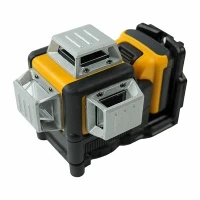

What is the mode structure of a laser level with measurements?
In the realm of construction, engineering, and various precision - based industries, laser levels with measurements have become indispensable tools. A laser level is a device that projects a highly visible laser beam, which can be used to establish a horizontal or vertical reference line for tasks such as aligning structures, installing fixtures, and ensuring level surfaces. Understanding the mode structure of a laser level with measurements is crucial for both professionals and enthusiasts who rely on these tools for accurate work.
Basic Concepts of Laser Mode Structure
The mode structure of a laser refers to the spatial distribution of the laser beam's intensity and phase. In a laser level, there are typically two main types of modes: transverse modes and longitudinal modes.
Transverse modes describe the intensity distribution of the laser beam in the plane perpendicular to the direction of propagation. The most common transverse mode is the TEM₀₀ mode, also known as the Gaussian mode. In a Gaussian - shaped beam, the intensity is highest at the center of the beam and decreases gradually towards the edges. This mode is highly desirable in laser levels because it provides a well - defined, concentrated beam that can be used for precise measurements.
Longitudinal modes, on the other hand, are related to the standing waves that exist within the laser cavity. These modes determine the frequency and wavelength of the laser light. A laser can operate in a single longitudinal mode (single - frequency laser) or multiple longitudinal modes (multi - frequency laser). For laser levels, single - longitudinal - mode operation is often preferred as it provides a more stable and monochromatic beam, which is essential for accurate distance and level measurements.
Mode Structure in Laser Levels with Measurements
In a laser level with measurements, the mode structure plays a vital role in determining the accuracy and reliability of the device. The quality of the mode directly affects the beam's divergence, focus, and intensity distribution.


A well - defined mode structure ensures that the laser beam remains straight and narrow over long distances. For example, in a Long Distance Laser Level, a stable Gaussian mode is necessary to project a clear and accurate reference line over extended ranges. If the mode is unstable or distorted, the beam may spread out or deviate from the intended path, leading to inaccurate measurements.
The mode structure also impacts the visibility of the laser beam. A properly structured beam will be more visible under different lighting conditions. For instance, in an outdoor environment, a laser level with a well - defined mode can project a bright and clear line, even in direct sunlight. The Outdoor 90 Degree Laser is designed to work effectively in outdoor settings, and its mode structure is optimized to ensure high visibility and accuracy.
Applications and Mode Requirements
Different applications of laser levels with measurements have specific mode requirements. In construction, for example, when installing cabinets or aligning walls, a laser level with a horizontal and vertical line projection is often used. The mode structure of these lasers needs to be precise to ensure that the lines are perfectly straight and perpendicular to each other.
In surveying, long - distance measurements are common. A laser level used for surveying must have a stable mode structure to project a beam over long distances without significant divergence. This allows surveyors to accurately measure distances and elevations.
For interior design and home improvement projects, a Mini Two - line Green Laser Level is often used. The green laser is more visible to the human eye compared to red lasers, and its mode structure should be optimized to provide a sharp and clear line for tasks such as hanging pictures or installing shelves.
Factors Affecting Mode Structure
Several factors can affect the mode structure of a laser level. The design of the laser cavity is one of the most important factors. The length, shape, and reflectivity of the cavity mirrors can influence the formation and stability of the modes. A well - designed cavity will support the desired mode and suppress unwanted modes.
The gain medium of the laser also plays a role. Different gain media have different properties that can affect the mode structure. For example, solid - state lasers and gas lasers have different characteristics in terms of mode formation and stability.
External factors such as temperature and vibration can also impact the mode structure. Temperature changes can cause the laser cavity to expand or contract, which may lead to mode shifts. Vibration can disrupt the stability of the laser beam and affect the mode quality.
Ensuring Optimal Mode Structure
As a supplier of laser levels with measurements, we take several steps to ensure that our products have an optimal mode structure. We use high - quality components in the design and manufacturing of our lasers. The laser cavities are carefully engineered to support the desired modes and minimize mode competition.
We also conduct rigorous testing on our products to ensure that the mode structure meets the required standards. This includes testing the beam quality, divergence, and stability under different conditions. By doing so, we can provide our customers with laser levels that offer accurate and reliable measurements.
Contact for Purchase and Consultation
If you are in need of a high - quality laser level with precise measurements, we invite you to contact us for more information. Our team of experts is ready to assist you in selecting the right product for your specific needs. Whether you are a professional in the construction industry or a DIY enthusiast, we have the perfect laser level for you.
References
- Hecht, Jeff. "Understanding Lasers: An Entry - Level Guide." O'Reilly Media, 2005.
- Siegman, Anthony E. "Lasers." University Science Books, 1986.