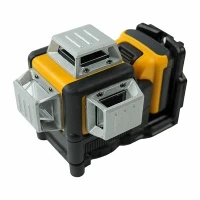

As a trusted Indoor Laser Level supplier, I've witnessed firsthand the critical role these tools play in various indoor construction and DIY projects. One question that often arises is about the long - term accuracy of indoor laser levels. In this blog, I'll delve into how the accuracy of an indoor laser level compares over time, exploring the factors that influence it and how to maintain it.
Understanding the Initial Accuracy of Indoor Laser Levels
When you first purchase an indoor laser level, it comes with a specified accuracy rating. This rating is usually expressed in terms of how far off the laser line or point can be over a certain distance. For example, an accuracy of ±1/8 inch at 30 feet means that at a distance of 30 feet, the laser line or point could deviate by up to 1/8 inch from the true horizontal or vertical.
The initial accuracy of a high - quality indoor laser level is typically very good. Our Indoor Laser Level is engineered to meet strict industry standards, providing reliable and precise measurements right out of the box. This accuracy is crucial for tasks such as installing cabinets, hanging pictures, or laying tiles, where even a small deviation can lead to significant errors in the final result.
Factors Affecting Accuracy Over Time
1. Mechanical Wear and Tear
One of the primary factors that can affect the accuracy of an indoor laser level over time is mechanical wear and tear. The internal components of the laser level, such as the motors, gears, and mirrors, are subject to constant movement and vibration during normal use. This can cause these components to gradually wear out, leading to a decrease in accuracy.
For instance, if the gears that control the rotation of the laser beam become worn, the beam may not rotate evenly, resulting in an inaccurate line or point. Similarly, if the mirrors that direct the laser beam are misaligned due to mechanical stress, the beam may not be projected in the correct direction.
2. Environmental Conditions
The environment in which the laser level is used can also have a significant impact on its accuracy over time. Exposure to extreme temperatures, humidity, and dust can all affect the performance of the laser level.
High temperatures can cause the internal components of the laser level to expand, which may lead to misalignment. On the other hand, low temperatures can make the components more brittle and prone to damage. Humidity can cause corrosion of the metal parts, while dust can accumulate on the lenses and mirrors, reducing the clarity and accuracy of the laser beam.
3. Improper Handling and Storage
How the laser level is handled and stored can also influence its long - term accuracy. Dropping the laser level or subjecting it to excessive shock can cause internal components to become misaligned or damaged. Storing the laser level in a damp or dirty environment can also lead to corrosion and other issues.
Measuring the Change in Accuracy Over Time
To measure the change in accuracy of an indoor laser level over time, it's important to conduct regular calibration checks. Calibration involves comparing the laser level's measurements against a known standard to determine if it is still accurate.
Most indoor laser levels come with a calibration procedure that can be performed by the user. This typically involves setting up the laser level on a flat surface and using a measuring device, such as a ruler or a plumb line, to check the accuracy of the laser beam. If the laser level is found to be out of calibration, it may need to be adjusted or sent to a professional for repair.
Maintaining the Accuracy of Indoor Laser Levels
1. Regular Cleaning
Regular cleaning is essential for maintaining the accuracy of an indoor laser level. Use a soft, dry cloth to clean the lenses and mirrors of the laser level, removing any dust or debris that may have accumulated. Avoid using abrasive materials or harsh chemicals, as these can damage the components.
2. Proper Storage
Store the laser level in a cool, dry place when not in use. Use the protective case that comes with the laser level to prevent damage from dust, moisture, and shock. If possible, store the laser level in a temperature - controlled environment to minimize the effects of temperature changes.
3. Periodic Calibration
As mentioned earlier, periodic calibration is crucial for maintaining the accuracy of an indoor laser level. Set a schedule for calibration checks, and follow the manufacturer's instructions carefully. If you're unsure how to calibrate the laser level, consult the user manual or contact the manufacturer for assistance.
Comparing Different Types of Indoor Laser Levels
There are several types of indoor laser levels available on the market, each with its own level of accuracy and performance. For example, our Digital Display Green Laser Level offers high - precision measurements and a clear digital display, making it ideal for professional use.


On the other hand, our Drainage Laser Level is specifically designed for drainage and grading applications, providing accurate slope measurements. While these different types of laser levels may have different initial accuracies, the factors that affect their accuracy over time are similar.
Conclusion
In conclusion, the accuracy of an indoor laser level can change over time due to mechanical wear and tear, environmental conditions, and improper handling and storage. However, by following proper maintenance procedures, such as regular cleaning, proper storage, and periodic calibration, you can ensure that your laser level maintains its accuracy for years to come.
If you're in the market for an indoor laser level or need to replace an old one, we invite you to explore our range of high - quality products. Our team of experts is always available to answer any questions you may have and help you choose the right laser level for your needs. Contact us today to start a conversation about your procurement requirements and let us help you find the perfect indoor laser level for your projects.
References
- Manufacturer's user manuals for indoor laser levels
- Industry standards for laser level accuracy
- Research on the effects of environmental factors on laser level performance