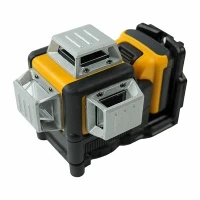

What is the beam polarization of an Outdoor 90 Degree Laser?
As a supplier of Outdoor 90 Degree Lasers, I often get asked about the beam polarization of these lasers. Beam polarization is a fundamental concept in the field of optics, and understanding it can significantly enhance the performance and application of our outdoor 90-degree lasers.
Understanding Beam Polarization
Beam polarization refers to the orientation of the electric field vector of a light wave. In a laser beam, the polarization can be linear, circular, or elliptical. Linear polarization means that the electric field vector oscillates in a single plane. Circular polarization occurs when the electric field vector rotates in a circular path as the wave propagates, and elliptical polarization is a combination of linear and circular polarization, where the electric field vector traces an elliptical path.
In the context of an outdoor 90-degree laser, the polarization of the beam can have a profound impact on its functionality. For example, in applications where the laser beam needs to pass through certain optical elements or interact with specific materials, the polarization state can affect the transmission, reflection, and absorption of the light.
Importance of Beam Polarization in Outdoor 90 Degree Lasers
- Enhanced Precision: In outdoor construction and surveying applications, precision is crucial. A well - polarized laser beam can provide more accurate and consistent measurements. Linear polarization, for instance, can be used to reduce glare and interference from ambient light, allowing for clearer and more reliable readings.
- Material Interaction: When the laser beam is used for tasks such as cutting or marking on different materials, the polarization can influence the way the laser energy is absorbed by the material. For some materials, a particular polarization state may result in more efficient processing, leading to better quality cuts or marks.
- Environmental Adaptability: Outdoor environments can be challenging, with factors such as sunlight, reflections from surfaces, and atmospheric conditions affecting the laser beam. A properly polarized beam can be more resistant to these external factors, ensuring stable performance even in harsh conditions.
Polarization Control in Outdoor 90 Degree Lasers
To achieve the desired polarization state, our Outdoor 90 Degree Lasers are equipped with advanced polarization control mechanisms. These mechanisms can adjust the polarization of the laser beam according to the specific application requirements.
One common method of polarization control is the use of polarizing filters. These filters can be adjusted to allow only light with a specific polarization direction to pass through, effectively controlling the polarization state of the output beam. Additionally, our lasers are designed with high - quality optical components that can maintain the polarization state over long distances and in various environmental conditions.
Applications of Outdoor 90 Degree Lasers with Controlled Polarization
- Tiling Walls: Our Outdoor 90 Degree Lasers are widely used for tiling walls. The Laser for Tiling Walls can provide accurate horizontal and vertical reference lines, ensuring that the tiles are installed perfectly. The controlled polarization of the laser beam helps in reducing reflections from the tile surfaces, making it easier for the installer to see the laser lines clearly.
- Indoor Laser Level: Although our lasers are designed for outdoor use, they can also be used indoors. The Indoor Laser Level function of our 90 - degree lasers is useful for tasks such as installing shelves, cabinets, and other fixtures. The polarization control ensures that the laser beam remains visible and accurate even in indoor lighting conditions.
- Laser Level for Patio: When building a patio, our Outdoor 90 Degree Lasers can be used to create level and straight lines for laying pavers or constructing retaining walls. The Laser Level for Patio with controlled polarization can provide reliable guidance, even in the presence of sunlight and other outdoor elements.
Factors Affecting Beam Polarization in Outdoor Environments
- Atmospheric Conditions: The atmosphere can scatter and depolarize the laser beam. Factors such as humidity, dust, and air turbulence can cause changes in the polarization state. Our lasers are designed to minimize these effects through advanced optical design and polarization control algorithms.
- Surface Reflections: Reflections from various surfaces in the outdoor environment can also affect the polarization of the laser beam. For example, reflections from water, metal, or glass surfaces can change the polarization state of the light. Our lasers are engineered to handle these reflections and maintain the desired polarization for accurate measurements.
Quality Assurance and Testing
As a supplier, we take quality assurance very seriously. All our Outdoor 90 Degree Lasers undergo rigorous testing to ensure that the beam polarization meets the highest standards. We use state - of - the - art testing equipment to measure the polarization state of the laser beam and make any necessary adjustments.
During the testing process, we simulate various outdoor conditions to evaluate the performance of the lasers. This includes testing the lasers in different levels of sunlight, humidity, and temperature. By doing so, we can ensure that our lasers perform reliably in real - world outdoor applications.
Contact for Purchase and Consultation
If you are interested in our Outdoor 90 Degree Lasers or have any questions about beam polarization or other technical aspects, we encourage you to contact us for a purchase consultation. Our team of experts is ready to assist you in selecting the right laser for your specific needs.


References
- Hecht, E. (2017). Optics. Pearson.
- Saleh, B. E. A., & Teich, M. C. (2019). Fundamentals of Photonics. Wiley.