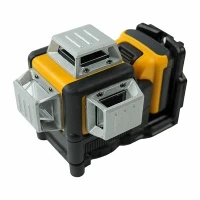

Hey there! As a supplier of bulk line lasers, I often get asked about what kind of training is needed to use these nifty devices. Well, let me break it down for you.


First off, it's important to understand the basics of how a line laser works. A line laser projects a straight line of light onto a surface, which can be used for a variety of applications like aligning shelves, installing cabinets, or laying out a room. It's a super handy tool, but like any tool, you need to know how to use it properly.
Familiarizing Yourself with the Device
The first step in using a bulk line laser is to familiarize yourself with the device. This includes reading the user manual, which will give you detailed instructions on how to operate the laser. You'll learn about things like how to turn it on and off, how to adjust the laser beam, and how to use any additional features it might have.
Most line lasers come with a power button, which is usually pretty straightforward to use. Just press the button to turn the laser on, and press it again to turn it off. Some lasers also have a mode button that allows you to switch between different laser modes, such as horizontal, vertical, or cross-line.
Understanding Laser Safety
Safety is always a top priority when using any kind of laser device. Line lasers emit a concentrated beam of light, which can be harmful to your eyes if you look directly into it. That's why it's important to wear safety glasses when using a line laser.
In addition to wearing safety glasses, you should also make sure to use the laser in a well-lit area. This will help reduce the glare from the laser beam and make it easier to see. You should also avoid pointing the laser at people or animals, as this can cause serious eye damage.
Setting Up the Laser
Once you're familiar with the device and understand the safety precautions, it's time to set up the laser. The first thing you'll need to do is find a stable surface to place the laser on. This could be a tripod, a table, or a wall mount.
If you're using a tripod, make sure it's set up on a level surface. You can use a bubble level to check if the tripod is level. Once the tripod is level, you can attach the laser to the tripod using the mounting bracket.
If you're using a wall mount, make sure it's securely attached to the wall. You can use screws or adhesive to attach the wall mount. Once the wall mount is attached, you can place the laser on the wall mount.
Adjusting the Laser Beam
Once the laser is set up, you'll need to adjust the laser beam to ensure it's level and straight. Most line lasers have an adjustable base that allows you to tilt the laser up or down and side to side. You can use the adjustable base to align the laser beam with the surface you're working on.
To adjust the laser beam, you'll need to use the adjustment knobs on the laser. These knobs are usually located on the side or back of the laser. Turn the knobs clockwise or counterclockwise to tilt the laser up or down and side to side.
You can also use a laser detector to help you adjust the laser beam. A laser detector is a device that can detect the laser beam and indicate its position. You can use the laser detector to make sure the laser beam is level and straight.
Using the Laser for Different Applications
Once you've adjusted the laser beam, you're ready to start using the laser for different applications. Here are some common applications for line lasers:
- Aligning Shelves: If you're installing shelves, you can use a line laser to make sure the shelves are level and straight. Simply project the laser beam onto the wall where you want to install the shelves, and use the laser beam as a guide to mark the position of the shelves.
- Installing Cabinets: If you're installing cabinets, you can use a line laser to make sure the cabinets are level and aligned. Simply project the laser beam onto the wall where you want to install the cabinets, and use the laser beam as a guide to mark the position of the cabinets.
- Laying Out a Room: If you're laying out a room, you can use a line laser to mark the walls, floors, and ceilings. Simply project the laser beam onto the walls, floors, and ceilings, and use the laser beam as a guide to mark the position of the furniture, fixtures, and other items.
Training Resources
If you're new to using a line laser, there are a number of training resources available to help you learn how to use the device. Here are some resources you might find helpful:
- User Manual: The user manual that comes with your line laser is a great resource for learning how to use the device. It will give you detailed instructions on how to operate the laser, how to adjust the laser beam, and how to use any additional features it might have.
- Online Tutorials: There are a number of online tutorials available that can help you learn how to use a line laser. These tutorials can be found on websites like YouTube and Vimeo.
- Training Courses: Some companies offer training courses on how to use a line laser. These courses can be a great way to learn how to use the device in a hands-on environment.
Conclusion
Using a bulk line laser can be a great way to make your projects easier and more accurate. However, it's important to make sure you have the proper training before using the device. By familiarizing yourself with the device, understanding laser safety, setting up the laser, adjusting the laser beam, and using the laser for different applications, you'll be able to use the device effectively and safely.
If you're interested in purchasing a bulk line laser, or if you have any questions about using a line laser, please don't hesitate to [contact us for a purchase consultation](link to your contact page). We'd be happy to help you find the right line laser for your needs and provide you with any training or support you might need.
References
- User manual of the line laser device.
- Online tutorials on YouTube and Vimeo.
- Training courses offered by various companies.